Food Nanoencapsulation Market Size, Share and Trends
The global food nanoencapsulation market is experiencing rapid growth, driven by increasing demand for functional foods, dietary supplements, and personalized nutrition solutions. As of 2025, the market is valued at USD 14.62 billion and is expected to grow from USD 16.03 billion in 2026 to approximately USD 36.63 billion by 2035, achieving a CAGR of 9.62% during the forecast period from 2026 to 2035.
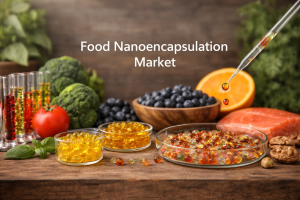
The food industry is increasingly turning to advanced technologies to improve the delivery and effectiveness of nutrients and flavors in food products. One such technology, nanoencapsulation, has emerged as a game-changer in food processing and packaging. Nanoencapsulation involves enclosing bioactive substances like nutrients, flavors, and preservatives in nanometer-sized carriers to improve their stability, bioavailability, and controlled release. This innovative technology has gained significant attention due to its ability to enhance shelf-life, improve food safety, and cater to personalized nutrition demands.
Food Nanoencapsulation Market Overview
The food nanoencapsulation market is a rapidly growing segment of the food industry, focused on improving the stability, bioavailability, and controlled release of bioactive ingredients like vitamins, minerals, probiotics, and omega-3 fatty acids. Nanoencapsulation involves enclosing these ingredients in nanometer-sized carriers, such as liposomes or nanoparticles, to protect them from degradation during processing and storage. The global market is expected to witness significant growth, reaching USD 36.63 billion by 2035, driven by increased demand for functional foods, dietary supplements, and personalized nutrition. The ability to enhance ingredient delivery while preserving taste and texture makes nanoencapsulation a key innovation in the food sector.
The market is also bolstered by the growing focus on shelf-life extension, food safety, and consumer health. With the rise in consumer awareness about nutrition and wellness, food manufacturers are turning to nanoencapsulation to meet these demands. The technology allows for the precise delivery of nutrients, improving their effectiveness and absorption in the body. Key factors contributing to the market’s expansion include advancements in nanotechnology, rising e-commerce platforms for easy product access, and an increasing focus on sustainable and natural ingredients. As the demand for innovative food products grows, the food nanoencapsulation market is poised for continued success.
Want to Explore More? Get a Free Sample Report Today!
https://www.towardsfnb.com/download-sample/6078
What is Food Nanoencapsulation?
Food nanoencapsulation is a cutting-edge technology that involves enclosing bioactive ingredients, such as vitamins, minerals, omega-3 fatty acids, probiotics, and antioxidants, in nanometer-sized carriers. These carriers can be made from various materials, including lipids, polymers, or proteins, and they serve as a protective barrier for the encapsulated ingredients. The purpose of nanoencapsulation is to enhance the stability, bioavailability, and controlled release of these nutrients, ensuring they remain effective during food processing, storage, and digestion.
The encapsulation process improves the protection of sensitive compounds from environmental factors like heat, light, and oxygen, which can degrade their effectiveness. Once consumed, the encapsulated nutrients are gradually released in the body, often targeting specific areas such as the gut for better absorption. This technology allows food manufacturers to create products that are not only nutrient-dense but also more efficient in delivering health benefits, making it increasingly popular in the food, beverage, and dietary supplement industries.
Food Nanoencapsulation Market Growth Factors
Several factors contribute to the rapid growth of the food nanoencapsulation market:
- Shelf-life Extension: Nanoencapsulation helps to preserve the stability of sensitive ingredients, such as vitamins, probiotics, and omega-3 fatty acids, which are prone to degradation. The ability to prolong the shelf-life of food products is a significant advantage, especially in the global food supply chain.
- Rising Demand for Personalized Nutrition: Consumers are increasingly seeking tailored nutritional solutions. Nanoencapsulation enables precise control over the release and absorption of nutrients, making it a vital technology for personalized nutrition.
- Increased Focus on Food Safety and Quality: As consumers become more health-conscious, food manufacturers are focusing on delivering high-quality, nutrient-rich products. Nanoencapsulation ensures that nutrients are effectively delivered to the body without being lost during processing, thus improving food quality and safety.
- Advancements in Nano-Technology: Ongoing research and technological advancements in nanotechnology are making nanoencapsulation techniques more efficient and cost-effective. This is accelerating the adoption of nanoencapsulation in the food industry.
- Rising Health Consciousness: With a global rise in lifestyle diseases, there is an increasing demand for functional foods, dietary supplements, and fortified food products. Nanoencapsulation plays a crucial role in delivering bioactive compounds such as probiotics, vitamins, and nutraceuticals effectively.
Health Benefits of Food Nanoencapsulation
Food nanoencapsulation offers several health benefits by improving the delivery and effectiveness of bioactive compounds in food products. Here are some of the key advantages:
-
Enhanced Nutrient Absorption: Nanoencapsulation increases the bioavailability of nutrients such as vitamins, minerals, omega-3 fatty acids, and antioxidants, which are often poorly absorbed in the body. By encapsulating these nutrients in nanoparticles or liposomes, they can be delivered more effectively to the target sites in the body, ensuring better absorption and utilization.
-
Improved Stability: Many sensitive nutrients, such as vitamins (especially Vitamin C and B12), probiotics, and omega-3s, are prone to degradation during food processing and storage. Nanoencapsulation helps protect these ingredients from oxidation, heat, and light, preserving their potency and effectiveness until consumption. This extended shelf-life makes it easier to maintain nutrient quality over time.
-
Targeted Delivery: Nanoencapsulation enables controlled release of nutrients, allowing them to be released gradually or at specific points in the digestive system. For example, probiotics encapsulated in nanoparticles can survive the harsh conditions of the stomach and be released in the intestines, where they can exert their beneficial effects. This targeted delivery increases the effectiveness of supplements and functional foods.
-
Improved Taste and Texture: Many bioactive compounds have unpleasant tastes or textures, which can deter consumers from taking supplements. Nanoencapsulation can mask these undesirable tastes and odors, making it easier to incorporate beneficial nutrients into food products like gummies, beverages, and snacks, enhancing consumer compliance and experience.
-
Enhanced Functional Foods: Nanoencapsulation allows for the creation of functional foods that offer specific health benefits, such as supporting immunity, bone health, or cognitive function. These foods can provide consumers with customized nutritional support, catering to individual health needs like stress management, digestive health, and weight management.
See Pricing and Personalize Your Report Today: https://www.towardsfnb.com/checkout/6078
Food Nanoencapsulation Market Opportunities
The food nanoencapsulation market holds promising opportunities:
- Expansion in Emerging Markets: Emerging economies, especially in Asia-Pacific and Latin America, present significant growth opportunities due to the increasing middle-class population and changing consumer preferences for health-conscious food products.
- Innovation in Functional Foods: As consumers demand more functional foods with health benefits, there is a growing opportunity for the development of novel nanoencapsulation-based products that enhance nutrition and taste while maintaining product stability.
- Sustainability and Eco-friendly Packaging: With growing concerns over environmental sustainability, the food industry is moving toward using eco-friendly packaging. Nanoencapsulation can play a pivotal role in reducing the need for preservatives and artificial additives, offering a more natural approach to food preservation.
- Development of Nanoencapsulation Solutions for Infant and Sports Nutrition: Infant and clinical nutrition segments are likely to benefit from nanoencapsulation due to its ability to deliver precise nutrient dosages and enhance the bioavailability of essential nutrients.
- Collaboration with Food Industry Giants: As the demand for nanoencapsulation grows, collaborations between established food companies and nano-technology firms will drive innovation, helping to develop cutting-edge products for a broader consumer base.
Why Food Nanoencapsulation is Gaining Popularity?
Food nanoencapsulation is gaining popularity for several reasons, largely due to its ability to enhance the functionality, safety, and efficiency of food products. One of the key drivers is its ability to improve the stability and bioavailability of sensitive ingredients like vitamins, minerals, probiotics, and omega-3 fatty acids. These nutrients often degrade during food processing or storage, but nanoencapsulation helps protect them, ensuring they remain effective when consumed. The technology also allows for controlled release, meaning these ingredients can be delivered more precisely to specific areas of the body, maximizing their health benefits.
Another reason for the growing popularity is the increasing demand for functional foods and personalized nutrition. Consumers are becoming more health-conscious and are seeking products that offer more than basic nutrition, such as those that support immunity, digestion, or cognitive health. Nanoencapsulation allows food manufacturers to develop these targeted, functional foods, meeting the specific needs of consumers. Additionally, as e-commerce platforms continue to grow, the accessibility and variety of these products are expanding, making it easier for consumers to find and purchase nanoencapsulated food products. Overall, food nanoencapsulation is seen as a revolutionary approach that addresses both consumer demand and the challenges faced by the food industry in maintaining ingredient potency, taste, and safety.
Top Companies in the Food Nanoencapsulation Market
Several industry players dominate the food nanoencapsulation market. Their expertise, market share, and product innovations are contributing to the overall growth of the industry:
- International Flavors and Fragrances (IFF): A leader in biosciences and fragrances, IFF focuses on manufacturing high-performance ingredients for food protection and personalized nutrition, including advanced nanoencapsulation technologies.
- Kerry Group: Known for its nutritional and taste solutions, Kerry uses nanoencapsulation to enhance the shelf-life and stability of food items like beverages, meat products, and dairy alternatives.
- Ingredion Incorporated: Ingredion specializes in creating customized, sustainable nanoencapsulation solutions for various food applications such as beverages, savory foods, dairy alternatives, and bakery products.
- DSM-Firmenich: This Swiss-Dutch multinational provides matrix-based systems, nanoemulsions, and lipid-based nanocarriers for enhancing the stability and bioavailability of ingredients in fortified products, beverages, and dairy.
- Givaudan: Focused on flavor protection and the delivery of functional ingredients, Givaudan plays a vital role in food nanoencapsulation by offering innovative solutions that extend shelf life and improve food quality.
Other Key Players
- BASF SE
- Tate & Lyle PLC
- Balchem Corporation
- Aveka Group
- Microcaps
- Cargill, Incorporated
- Sensient Technologies
- Lonza Group
- TasteTech
- Encapsys
Need Expert Guidance? Schedule a Personalized Session Today: https://www.towardsfnb.com/schedule-meeting
Segmentation Analysis
The food nanoencapsulation market is segmented into various categories based on the encapsulation technique, core material, application, and region. Here’s a detailed analysis of these segments:
By Encapsulation Technique
- Nanoemulsification: Involves the formation of nanoparticles by emulsifying oil and water to encapsulate bioactive compounds. It is one of the most widely used techniques due to its efficiency and ability to incorporate both hydrophilic and lipophilic ingredients.
- Nanoliposomes: These lipid-based vesicles are used to encapsulate nutrients and flavors, improving stability and bioavailability. They are commonly used in fortifying food and beverages.
- Nanoprecipitation: This technique is ideal for encapsulating water-soluble nutrients, creating stable nanoparticles with controlled release.
- Inclusion Complexes: A form of encapsulation where bioactive compounds are trapped inside a host molecule, offering controlled release and enhanced stability.
- Nanoparticles (Polymeric & Lipid-based): Polymeric and lipid-based nanoparticles are used to encapsulate nutrients and bioactive ingredients, enhancing their solubility and bioavailability.
By Core Material
- Encapsulated Ingredients (Vitamins & Minerals): These core materials are essential for health and wellness, and their protection is vital to prevent degradation.
- Probiotics & Enzymes: Nanoencapsulation is used to protect probiotics and enzymes, improving their survival and efficacy.
- Nutraceuticals (Omega-3, Carotenoids, Polyphenols): These bioactive compounds benefit from nanoencapsulation by enhancing their bioavailability and shelf life.
- Flavors & Aromas: Nanoencapsulation helps preserve and deliver flavors and aromas, ensuring consistency in taste and longer-lasting freshness.
- Organic Acids & Preservatives: Preserving the activity of organic acids and preservatives is critical in maintaining the shelf-life of food products.
By Application
- Functional Foods: Nanoencapsulation is heavily used in the production of functional foods, providing health benefits beyond basic nutrition.
- Dietary Supplements: Nutrient delivery systems are enhanced using nanoencapsulation to improve absorption and effectiveness.
- Infant Nutrition: Precision in nutrient delivery is crucial in infant nutrition, where nanoencapsulation ensures that nutrients are delivered effectively.
- Sports & Clinical Nutrition: This segment benefits from nanoencapsulation due to its ability to optimize nutrient delivery, improving athletic performance and recovery.
- Bakery, Dairy & Confectionery: Nanoencapsulation is used to preserve the flavor and nutritional integrity of bakery items, dairy products, and confectioneries.
Regional Analysis
- North America: Dominates the market due to the advanced food industry and high consumer demand for functional foods and dietary supplements.
- Europe: The European market benefits from increased focus on health and wellness trends and a robust regulatory framework supporting nano-technology in food.
- Asia Pacific: Growing food industry, increasing health awareness, and rising disposable incomes make this region a rapidly expanding market for nanoencapsulation technologies.
- MEA (Middle East and Africa): While still in the early stages of adoption, the MEA region shows promise due to growing demand for functional foods and changing dietary habits.
- Latin America: The demand for food nanoencapsulation is expected to grow, driven by the increasing popularity of dietary supplements and fortified foods.
Discover More Insights: https://www.foodbeveragestrategies.com/agave-syrup-market-size/
Future Outlook
The food nanoencapsulation market is poised for substantial growth as food manufacturers look to enhance the stability, shelf-life, and bioavailability of ingredients. Technological advancements, an increasing focus on personalized nutrition, and rising consumer demand for functional foods and dietary supplements are key drivers behind this growth. With opportunities across emerging markets and various food segments, the food nanoencapsulation market presents numerous prospects for innovation and expansion. As we move into the future, key players like Kerry Group, Ingredion Incorporated, and DSM-Firmenich will continue to shape the landscape of this transformative industry.
Unlock unlimited reports and insights with a yearly membership: https://www.towardsfnb.com/get-an-annual-membership
About Towards FnB
Towards FnB connects food and beverage innovations with intelligence to help global brands tackle their most challenging problems. With over 20 years of expertise, we provide data-driven insights, emerging trends, and strategic solutions that empower businesses in the food and beverage industry. Our tailored reports, in-depth analysis, and actionable strategies help clients stay ahead of the competition and boost profitability.
We offer comprehensive market insights, focusing on sustainability, innovation, and consumer behavior, to help businesses navigate the dynamic food and beverage landscape.
Contact Us https://www.towardsfnb.com/contact-us
Email: sales@towardsfnb.com