Non-Anticoagulant Rodenticides Market Size, Growth and Trends Analysis
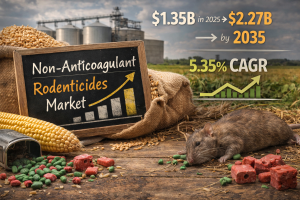
The global non-anticoagulant rodenticides market is witnessing steady growth as industries seek effective alternatives to traditional anticoagulant-based pest control solutions. The market was valued at USD 1.35 billion in 2025 and is projected to grow from USD 1.42 billion in 2026 to approximately USD 2.27 billion by 2035, registering a CAGR of 5.35% during the forecast period.
Non-anticoagulant rodenticides are increasingly being adopted due to their fast-acting mechanisms, effectiveness against resistant rodent populations, and reduced environmental persistence compared to anticoagulant products. These solutions are widely used across agriculture, warehouses, food processing units, and urban pest control systems. The market is also benefiting from rising food security concerns, increasing post-harvest losses, and growing investments in modern grain storage infrastructure, particularly in emerging economies.
Non-Anticoagulant Rodenticides Market Overview
Non-anticoagulant rodenticides are chemical agents designed to control rodent populations without interfering with blood clotting mechanisms. Unlike anticoagulant rodenticides, which cause internal bleeding over time, non-anticoagulant variants act through different mechanisms such as disrupting metabolic processes, affecting the nervous system, or inducing toxicity through alternative biochemical pathways. These products are widely used across agricultural fields, warehouses, and urban environments where rodent infestations can lead to severe economic losses and health risks. Their ability to deliver rapid results, often with a single dose, makes them particularly attractive in high-risk settings such as grain storage facilities and food processing units.
The market has seen a notable shift toward non-anticoagulant formulations due to increasing resistance among rodent populations to anticoagulant compounds. This resistance has been documented across multiple regions, forcing pest control professionals and agricultural stakeholders to adopt more effective alternatives. At the same time, regulatory scrutiny around environmental impact and secondary poisoning has further accelerated the adoption of non-anticoagulant solutions. Governments and environmental agencies are encouraging safer pest control methods that minimize risks to non-target species, including birds of prey and domestic animals.
What Are Non-Anticoagulant Rodenticides?
Non-anticoagulant rodenticides are chemical agents that control rodent populations through mechanisms other than blood coagulation disruption. Unlike anticoagulants, they typically act faster and are often used where rodents have developed resistance.
These rodenticides work in several ways depending on the active ingredient. Some, like bromethalin, affect the nervous system and cause paralysis. Others, such as cholecalciferol (vitamin D3), disrupt calcium balance in the body, leading to organ failure. Compounds like zinc phosphide release toxic gases in the stomach after ingestion, resulting in rapid death. Strychnine, another type, targets the central nervous system and causes severe muscle contractions. Non-anticoagulant rodenticides are commonly used in agricultural fields, warehouses, food storage facilities, and urban environments where quick and effective rodent control is necessary. They are especially valuable in managing rodent populations that no longer respond to anticoagulant-based poisons.
Non-Anticoagulant Rodenticides Market Growth Factors
Rising Rodent Resistance to Anticoagulants
One of the strongest drivers is the growing resistance among rodents to anticoagulant rodenticides, especially in urban and agricultural regions. This has accelerated the shift toward non-anticoagulant alternatives that deliver rapid and effective control.
Expansion of Grain Storage and Warehousing
With global food demand increasing, countries are investing heavily in grain storage facilities, cold chains, and warehouses, all of which are highly susceptible to rodent infestations. This directly fuels demand for rodenticides.
Increased Focus on Food Safety and Hygiene
Strict regulations around food contamination and hygiene standards in industries such as food processing, pharmaceuticals, and logistics are boosting the adoption of high-performance rodent control solutions.
Urbanization and Infrastructure Growth
Rapid urban expansion has led to increased rodent habitats, especially in densely populated cities. Municipal authorities and pest control companies are deploying advanced rodenticide solutions to manage infestations.
Types of Non-Anticoagulant Rodenticides
Non-anticoagulant rodenticides are grouped based on how they affect rodents. Each type works differently and is used depending on the situation.
1. Bromethalin – Fast-acting neurotoxin
- Attacks the nervous system of rodents
- Causes paralysis and death within a short time
- Works with a single feeding, making it highly effective
- Commonly used in homes and commercial pest control
2. Zinc Phosphide – Widely used in agriculture
- Reacts in the stomach to release toxic gas (phosphine)
- Leads to quick death after ingestion
- Very popular in farms and grain storage areas
- Cost-effective for large-scale use
3. Cholecalciferol (Vitamin D3) – Safer alternative option
- Causes calcium imbalance in the body
- Leads to organ failure in rodents
- Lower risk of secondary poisoning (safer for pets/wildlife compared to some others)
- Used in both residential and commercial settings
4. Strychnine – Highly toxic and restricted
- Affects the muscle and nervous system
- Causes rapid and severe reactions
- Works very quickly but is highly dangerous
- Use is limited or restricted in many regions due to safety concerns
See Pricing and Personalize Your Report Today: https://www.towardsfnb.com/checkout/6085
Non-Anticoagulant Rodenticides Market Opportunities
- The non-anticoagulant rodenticides market presents several promising opportunities, particularly in emerging economies. Countries in Asia Pacific, Latin America, and Africa are witnessing rapid growth in agricultural activities and urban infrastructure, creating a strong demand for efficient pest control solutions.
- The integration of smart pest control technologies is another area of opportunity. Companies like Rentokil Initial Plc are developing advanced monitoring systems that use sensors and data analytics to detect and manage rodent activity in real time. These technologies, when combined with non-anticoagulant rodenticides, offer a comprehensive and efficient pest management solution.
- There is also a growing demand for environmentally friendly and sustainable pest control products. Manufacturers are investing in research and development to create formulations that are effective yet have minimal environmental impact. This includes products that degrade quickly in the environment and reduce the risk of secondary poisoning.
- The increasing awareness of hygiene and food safety standards, particularly in the food processing and storage industries, is further driving demand. Regulatory frameworks are becoming stricter, requiring businesses to implement effective pest control measures. This is creating a favorable environment for the adoption of non-anticoagulant rodenticides.
- Additionally, the rise of e-commerce and logistics industries has led to the proliferation of warehouses and distribution centers, which are highly susceptible to rodent infestations. This is opening new avenues for market growth, as these facilities require reliable and efficient pest control solutions to maintain operational integrity.
Why This Non-Anticoagulant Rodenticides is Growing Fast
The non-anticoagulant rodenticides market is growing quickly, but not by accident it’s being pushed forward by some very real problems that traditional pest control methods are struggling to solve.
One of the biggest reasons is the rising resistance of rodents to anticoagulant rodenticides. For decades, anticoagulants were the go-to solution for controlling rats and mice. However, over time, many rodent species have developed genetic resistance, especially in heavily treated regions. This has reduced the effectiveness of older products and forced farmers, warehouses, and pest control professionals to switch to non-anticoagulant alternatives that still work reliably. In many cases, these alternatives provide faster results with a single dose, which is a major advantage in high-infestation scenarios.
Another strong growth driver is the rapid expansion of the global grain storage and food supply chain. As countries increase food production to meet growing population demands, they are also investing heavily in storage infrastructure such as silos, warehouses, and cold chains. These environments are highly vulnerable to rodent infestations, which can cause massive economic losses and contamination risks. Non-anticoagulant rodenticides are becoming essential tools in protecting stored food due to their quick action and effectiveness in resistant rodent populations.
Top Companies in the Non-Anticoagulant Rodenticides Market
- Bayer AG – Strong portfolio in crop science and pest control solutions
- Syngenta – Offers products like Talon Weatherblok XT and Talon-G
- UPL – Known for Ratol, widely used in agricultural and storage settings
- Liphatech, Inc. – Diverse product range including TakeDown II and monitoring baits
- JT Eaton – Focuses on residential and professional pest control solutions
- BASF SE – Developer of Selontra, a key non-anticoagulant product
- NEOGEN Corporation – Focus on food and animal safety applications
- Rentokil Initial Plc – ლიდng in smart pest control systems
Need Expert Guidance? Schedule a Personalized Session Today: https://www.towardsfnb.com/schedule-meeting
Segmentation Analysis
By Type
- Bromethalin
- Widely used due to its fast-acting neurotoxic effects and effectiveness against resistant rodents.
- Cholecalciferol
- Gaining popularity as a reduced-risk alternative with lower environmental persistence.
- Strychnine
- Limited use due to toxicity concerns and regulatory restrictions, but still relevant in specific applications.
- Zinc Phosphide
- Highly effective in agricultural fields, especially for large-scale rodent control.
By Mode of Application
- Pellets
- Dominant segment due to ease of handling, targeted placement, and high effectiveness.
- Spray/Liquid
- Used in specific environments such as burrow treatments or industrial settings.
- Powder/Dust
- Applied in hard-to-reach areas and for tracking rodent movement.
By End-Use
- Agricultural Fields
- Largest segment driven by crop protection needs and high rodent activity.
- Warehouses
- Rapidly growing segment due to increasing global storage infrastructure.
- Urban Centers
- Demand driven by municipal pest control programs and residential applications.
Regional Insights
North America
- High adoption of advanced pest control technologies
Strong presence of key players like BASF, Bell Labs, and Neogen
Strict regulatory frameworks promoting safer formulations
Europe
- Stringent environmental regulations
Increasing demand for non-toxic and eco-friendly solutions
Adoption of integrated pest management practices
Asia Pacific
- Expanding agriculture and warehousing sectors
Rising urbanization and population density
Strong presence of companies like UPL
Middle East & Africa (MEA)
- Increasing investments in food security and storage infrastructure
Growing awareness of pest-related losses
Latin America
- Large-scale agricultural activities
Rising need for efficient pest control in crop production
Discover More Insights: https://www.foodbeveragestrategies.com/soy-isoflavone-concentrates-market-size/
Future Outlook
The non-anticoagulant rodenticides market is entering a phase of strategic transformation, driven by resistance challenges, regulatory pressures, and the need for sustainable pest control solutions. While traditional products still hold relevance, the shift toward fast-acting, environmentally safer, and technologically integrated solutions is reshaping the competitive landscape.
Overall, the non-anticoagulant rodenticides market represents a critical component of global pest management strategies, ensuring food security, public health, and economic stability in an increasingly complex world.
Unlock unlimited reports and insights with a yearly membership: https://www.towardsfnb.com/get-an-annual-membership
About Towards FnB
Towards FnB connects food and beverage innovations with intelligence to help global brands tackle their most challenging problems. With over 20 years of expertise, we provide data-driven insights, emerging trends, and strategic solutions that empower businesses in the food and beverage industry. Our tailored reports, in-depth analysis, and actionable strategies help clients stay ahead of the competition and boost profitability.
We offer comprehensive market insights, focusing on sustainability, innovation, and consumer behavior, to help businesses navigate the dynamic food and beverage landscape.
Contact Us https://www.towardsfnb.com/contact-us
Email: sales@towardsfnb.com